
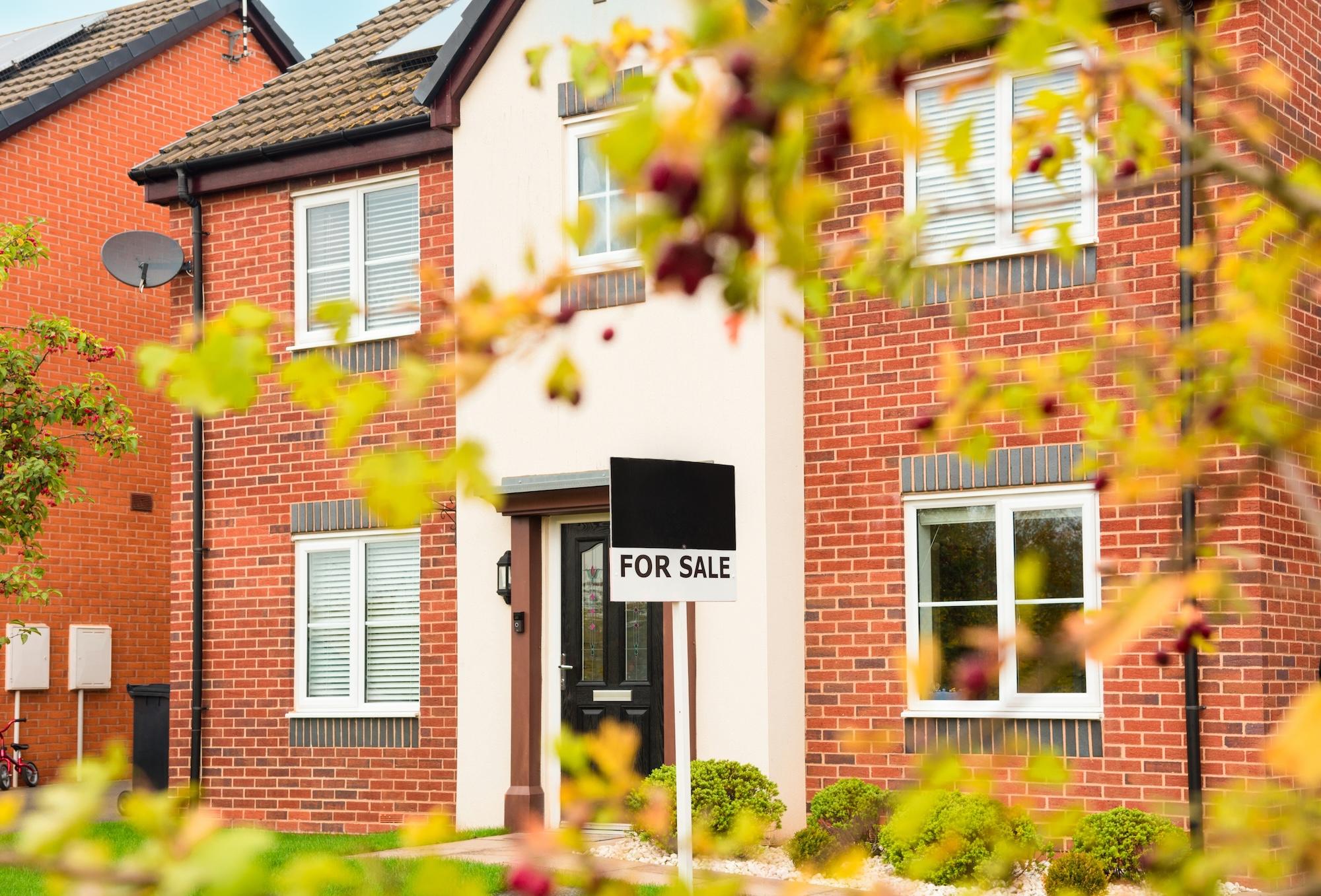
House hunters are returning after the summer lull, but a bumper choice of properties means buyers can afford to be choosier. Here is what the changing autumn market could mean if you are planning a move.
Britain’s housing market is showing signs of waking up for autumn.
New sellers increased their asking prices by 0.7 per cent in September, equivalent to £2,441, taking the average asking price to £367,440, according to the latest Rightmove House Price Index1.
It is the first monthly increase since May and slightly stronger than the average 0.5 per cent September rise recorded over the past decade1.
But look beyond that headline and something potentially more significant is happening for would-be buyers.
There are now more homes available for sale than at any comparable point in the past 12 years, while the number of buyers making enquiries is still 9 per cent lower than a year ago1.
In other words, buyers are returning, but they are shopping in a market where they have plenty to choose from.
And that could change the balance of negotiations.
Buyers are coming back, but there is no feeding frenzy
There are certainly signs of renewed activity.
Rightmove recorded a 5 per cent jump in buyer demand during the first week of September, compared with an average increase of just 0.4 per cent during the same week over the previous five years. London and the South West saw particularly strong post-summer increases2.
The latest survey from the Royal Institution of Chartered Surveyors also suggests conditions are becoming less subdued.
Its measure of new buyer enquiries improved for a fifth consecutive month in August, from a net balance of -28 per cent in July to -19 per cent. Agreed sales also became less negative, moving from -30 per cent to -17 per cent3. These figures are survey balances showing whether more estate agents are reporting increases or decreases, rather than the percentage change in actual transactions3.
That is an improvement, but it is not the same as saying the market is booming.
Zoopla’s latest research tells a similar story. It found 5 per cent more homes for sale than a year earlier, while property searches were 7 per cent higher. Yet the number of sales being agreed remained 6 per cent below last year’s level4.
For buyers, that combination matters.
More people may be looking, but sellers are competing for their attention.
So, can buyers start negotiating harder?
Potentially, yes, although the strength of your position will depend heavily on the property and local market.
A home that has just come onto the market at a realistic price in a sought-after area may still attract considerable competition. A property that has been sitting unsold for weeks, has already had its asking price reduced, or is one of many similar homes available locally may be a different story.
Rightmove’s figures illustrate how dramatically conditions vary around Britain.
Around 91 per cent of homes coming to market in Scotland are currently finding a buyer, compared with 71 per cent in the North West, 56 per cent in the South East and just 42 per cent in London1.
That is why national headlines can only tell you so much.
A buyer in Edinburgh may be negotiating in very different conditions from someone looking at flats in London or family homes in the South East.
It also means buyers should not assume that a high level of supply automatically translates into a large discount.
Instead, it gives them something equally valuable: choice.
If there are several properties that meet your requirements, you may be in a better position to walk away when the numbers do not work.
Sellers cannot ignore the competition
For homeowners hoping to move this autumn, the message is slightly different.
The market is active, but simply putting a property up for sale does not guarantee a queue of buyers.
Rightmove says 74 per cent of homes that have sold so far this year were priced at a level that did not subsequently require an asking-price reduction1.
With stock at a 12-year seasonal high1, buyers have plenty of alternatives if they believe a property is overpriced.
That could make the initial asking price particularly important this autumn.
There is also a distinction worth making between asking prices and actual selling prices.
Rightmove’s £367,440 figure measures the prices being requested by new sellers1. The latest official UK House Price Index, which is based on completed transactions and therefore runs several months behind the market, puts the average UK property price at £273,000 in July, up 1.4 per cent from a year earlier5.
Nationwide’s separate mortgage-based index also described price growth as subdued, recording annual growth of 1.6 per cent in August and a seasonally adjusted monthly increase of 0.2 per cent6.
The broad picture, therefore, is one of modest price growth rather than another rapid surge in values.
Being ready to buy could matter more than trying to time the market
For anyone planning a move, the temptation is to wait for the perfect combination of cheaper property and cheaper borrowing.
The difficulty is that housing and mortgage markets rarely move neatly in the same direction at the same time.
The Bank of England kept Bank Rate at 3.75 per cent on 17 September, but borrowing costs remain an important constraint on affordability and the Bank has noted that mortgage rates are materially higher than they were earlier in the year7.
So rather than trying to guess whether prices or mortgage rates will be higher or lower in a few months’ time, buyers may find it more useful to understand what they can comfortably afford today.
Before making an offer, consider your deposit, likely monthly mortgage payments, purchase costs and how much financial breathing room you want to retain after moving.
Having a clear idea of your borrowing position can also help you judge whether an apparently attractive property price genuinely works for your household finances.
What should you do if you are thinking of moving?
For buyers, the increased choice of property is welcome, but affordability should still come first. Research comparable properties, find out how long a home has been on the market and avoid stretching your budget simply because you have found somewhere you like.
For sellers, this is a market where realistic pricing matters. An ambitious asking price may simply encourage buyers to look at one of the many competing properties available.
And for anyone who needs a mortgage to make their move happen, understanding the financing before becoming emotionally committed to a property can put you in a much clearer position.
If you are thinking about buying or moving home, we can help you understand your mortgage options and what you may be able to borrow based on your individual circumstances. Mortgage availability and the amount you can borrow are subject to lender criteria and affordability assessments.
Your home/property may be repossessed if you do not keep up repayments on a mortgage or other debt secured on it.
There may be a fee for mortgage advice. The precise amount of the fee will depend on your circumstances.
Think carefully before securing other debts against your home/property.
All the information in this article is correct as of the publish date 24th September 2026. The opinions expressed in this publication are those of the authors. The information provided in this article, including text, graphics and images does not, and is not intended to, substitute advice; instead, all information, content, and materials available in this article are for general informational purposes only. Information in this article may not constitute the most up-to-date legal or other information.
Please be aware that by clicking on to any of the above links you are leaving our website. Please note that neither we nor HL Partnership Limited are responsible for the accuracy of the information contained within the linked site(s) accessible from this page.
Sources
- Rightmove. (2026) House Price Index: September 2026. [online] Available at: https://www.rightmove.co.uk/news/content/uploads/2026/09/Rightmove-HPI-21st-September.pdf [Accessed 22 September 2026].
- Rightmove. (2026) Back-to-school buyer bounce outpaces typical September uplift. [online] Available at: https://www.rightmove.co.uk/press-centre/back-to-school-buyer-bounce-outpaces-typical-september-uplift/[Accessed 22 September 2026].
- Royal Institution of Chartered Surveyors. (2026) UK Residential Survey August 2026. [online] Available at: https://www.rics.org/news-insights/uk-residential-survey-august-2026 [Accessed 22 September 2026].
- Zoopla. (2026) House Price Index: August 2026. [online] Available at: https://www.zoopla.co.uk/discover/house-prices/house-price-index/ [Accessed 22 September 2026].
- HM Land Registry. (2026) UK House Price Index summary: July 2026. [online] GOV.UK. Available at: https://www.gov.uk/government/statistics/uk-house-price-index-for-july-2026/uk-house-price-index-summary-july-2026 [Accessed 22 September 2026].
- Nationwide Building Society. (2026) House Price Index: August 2026. [online] Available at: https://www.nationwide.co.uk/media/hpi/download/vythg-d14p3-yl514-8msgc-5bxd8 [Accessed 22 September 2026].
- Bank of England. (2026) Monetary Policy Summary, September 2026. [online] Available at: https://www.bankofengland.co.uk/monetary-policy-summary-and-minutes/2026/september-2026 [Accessed 22 September 2026].